Technology – the passion
Information and news from the technology corner
Latest LED technology
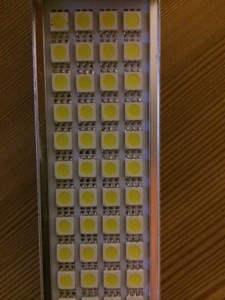
Now you can start saving electricity with the latest LED technology LED is the abbreviation for "light-emitting diode" and refers to an electronic semiconductor component. When current flows through the diode in the forward direction, it emits light – with virtually no energy loss due to heat generation and without harmful UV rays.
LEDs are fundamentally different from all previously used light sources. Many of their properties are unique. LED lamps use these special LED qualities as a starting point to produce high-quality and efficient lighting.
The special qualities of LED lamps are:
Low energy consumption
Long service life
No toxic materials that need to be disposed of as hazardous waste
High light quality and colour stability
IR- and UV-free light.
The main advantages of LED technology are therefore low energy consumption, accompanied by a reduction in CO2 emissions to just 1/5 of that of incandescent bulbs. In addition, their continuous light spectrum offers better colour rendering and ensures a natural light sensation. Furthermore, they have a very long service life of up to 50,000 hours.
Approximate light output comparison:
1W power/high-performance LED Light output approximately equivalent to a max. 10W low-voltage halogen lamp (usually closer to 10W)
3W power/high-performance LED Light output approximately equivalent to a max. 35W low-voltage halogen lamp (usually closer to 20W)
5W power/high-performance LED Light output approximately equivalent to a max. 50W low-voltage halogen lamp (usually closer to 35W)
8W power/high-performance LED Light output approximately equivalent to a max. 60W incandescent lamp
Once again, the next stage of the "incandescent light bulb ban" is coming into force, and with it, the last classic incandescent light bulbs for room lighting are disappearing from the shelves. Whether this is a blessing or a curse is up to you to decide. Here you will find all the important information on the subject and how you can respond to it.
You can do your bit without much effort. It starts with simply replacing your conventional light bulbs. Has the light bulb burned out?
It is precisely this potential for savings that the ban on incandescent light bulbs addresses, making it part of the EU's climate protection programme.
With the Kyoto Protocol, member states have committed to reducing their CO2 emissions by 20% by 2020 compared to 1990 levels. This announcement is now being followed by initial measures.
What does the ban on incandescent light bulbs entail?
In July 2005, the EU Directive (Eco-Design Requirements for Energy-Using Products, 2005/32/EC) decided on the long-term phase-out of conventional incandescent light bulbs.
The directive, which is part of the EU's climate protection programme, contains the following eco-design requirements:
improved environmental compatibility
reduced energy consumption
increasing market penetration of energy-efficient technologies
no impairment of function from the user's point of view
The aim is to phase out energy-inefficient light bulbs and switch to so-called energy-saving bulbs, which offer the advantage of lower power consumption while maintaining the same light output. The first step was taken in September 2009.
The ban on incandescent bulbs does not mean that private households have to replace all traditional light bulbs by the specified date. However, switching to energy-saving alternatives such as fluorescent or LED bulbs already has clear advantages today.
For manufacturers and retailers, however, the ban on the sale of these energy-intensive bulbs will apply from September. The familiar incandescent bulb in its various wattages will thus be gradually phased out.
Incandescent bulb ban
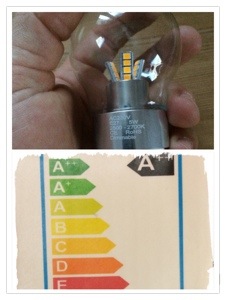
Halogen and incandescent bulbs of 80 watts and above that fall below energy efficiency class C
Frosted halogen and incandescent bulbs that fall below energy efficiency class A
Energy-saving bulbs that fall below energy efficiency class A
Further stages of adjustment and the replacement of conventional incandescent bulbs will take place annually:
1 September 2010 Halogen and incandescent bulbs of 65 watts or more that are worse than energy efficiency class C
1 September 2011 Halogen and incandescent bulbs of 45 watts or more that are worse than energy efficiency class C
1 September 2012 Halogen and incandescent bulbs of 7 watts or more that are worse than energy efficiency class C
1 September 2013 Increase in quality requirements, criteria to be defined in 2009
1 September 2016 Ban on all halogen and incandescent bulbs with an energy efficiency rating lower than B
The EU directive also provides for additional labelling protection. This means that only products in energy class A may be labelled as "energy-saving".
Up to 90% electricity savings
Longer service life of approx. 50,000 hours
Low heat generation
No UV or infrared radiation
Price example:
A 7-watt LED lamp can replace a 50-watt halogen lamp. With an estimated burning time of 5 hours per day and a price of approx. 23 pence per kilowatt hour, this would mean electricity savings of £18 per year. With a correspondingly higher burning time of, for example, 7 hours, this would amount to savings of £25 per LED lamp.
A worthwhile investment!
What to look for when buying LED bulbs!!
There are now very inexpensive LED bulbs available, but these are often of poor to mediocre quality. Although they save electricity, the light intensity is often far too low and the light beam is very short.
n addition, they usually have a short service life.
The four principles for buying LED bulbs.
Unlike conventional energy-saving bulbs, you always have to pay attention to the lumen intensity of LED bulbs. This should be at least 400lm (lumens) for an LED bulb. The higher the lumen value, the stronger the light.
BEAM ANGLE
Poor-quality LED bulbs often have a beam angle of only 15-20 degrees. An angle of at least 40 degrees is recommended, even for small LED bulbs such as MR 16 or GU 10.
LIFESPAN
A lifespan of 40,000-50,000 hours is considered high quality. LED lamps with a shorter service life are not recommended.
WATTAGE OF LED LAMPS
A 7-watt LED lamp can replace a 50-watt halogen spotlight. However, the above criteria of lumen output, beam angle and service life should be met.